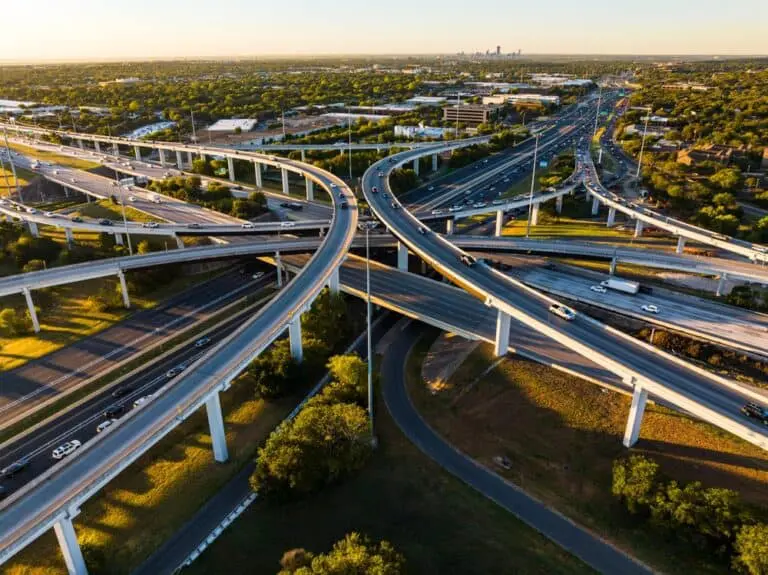
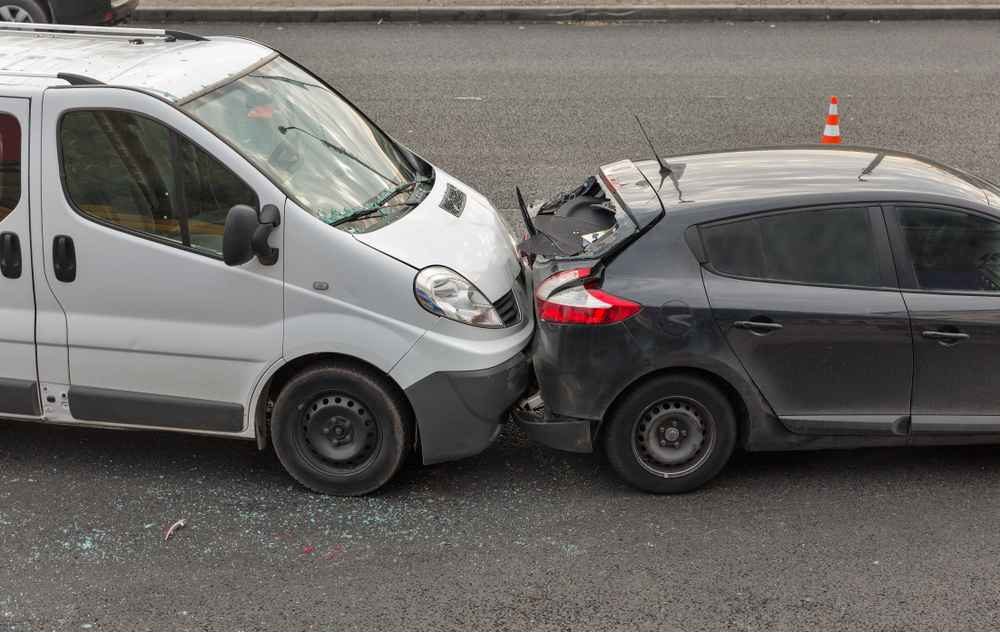
None of us plan on getting into a car accident, but they can happen when you least expect it — especially in Texas. Vehicles travel over 307 billion miles in the state each year, which means there are a lot of opportunities for Texans to get into a car wreck. Here are some important facts and statistics about Texas car accidents so you know what situations you should have your guard up in.
How Many Car Accidents Happen in Texas Per Year?
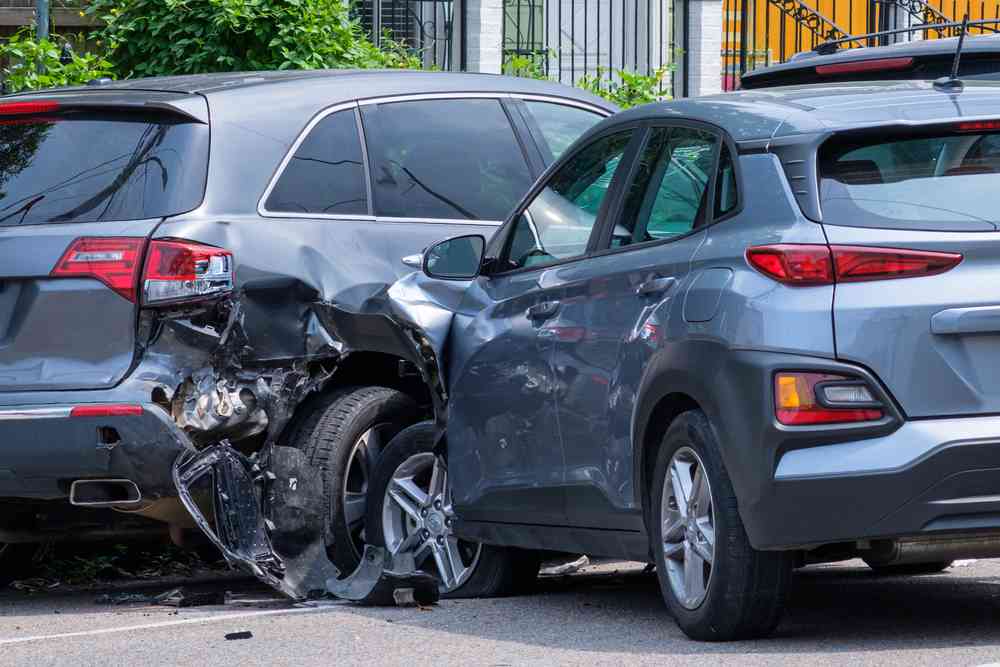
Approximately 600,000 car accidents happened in Texas in 2025, averaging more than 1,600 per day – with someone being injured in a crash every 2 minutes and 5 seconds. Thankfully, Texas did see a slight decrease in the number of fatalities caused by traffic accidents — down to 4,150 from 4,283 in 2023. (Source: Texas Department of Transportation (TxDOT) Car crashes with possible or confirmed injuries tend to make up over half of the car accidents that happen every year. That means if you do get into a car accident in Texas, it’s more likely than not to experience some type of injury. Injuries from car accidents can range from mild scrapes and bruises to serious, life-threatening conditions. In 2025, more than 17,500 people sustained serious injuries from car crashes in Texas.
For Travis County residents, see our resource on Austin car accident statistics
What Is the Leading Cause of Texas Car Accidents?
Whether you’re driving on rural roads or interstate highways, driving across Texas can come with challenges and hazards. In fact, two of the most hazardous roads in America are located in Texas — Interstate 35 and Interstate 45. The leading cause of car accidents in Texas is speeding (131,978 in 2024 — 22,227 resulted in possible injury), followed by distracted driving (81,101 crashes in 2024 — 10,732 resulted in possible injury).
With millions of miles of roadways to travel in Texas, driving at illegal or unsafe speeds can put you and others on the road at risk. Car crashes that occur because of speeding typically have higher injury rates because of the unsafe speeds involved. And now more than ever, drivers have distractions right at their fingertips. From CarPlay and Android Auto to cell phones, it can be so tempting to take your eyes off the road and accidentally end up in a wreck. This is why it’s so important to remain vigilant on the road and drive with care, especially in areas where the risk of collisions is higher.
What City in Texas Has the Most Car Accidents?
The city in Texas with the most car accidents in 2024 was Houston — more than three times the number from Austin and accounting for nearly 12% of all crashes in Texas. Houston recorded over 66,000 car accidents alone, resulting in more than 22,000 possible injuries. The city with the second most car accidents in 2023 was San Antonio with just under 40,000 car accidents, followed by Dallas with 26,109 car accidents. El Paso and Fort Worth each totaled 15,253 and 12,865 car accidents, respectively, followed by Austin at 10,791.
It is worth noting that these totals only include traffic accidents reported to the police (and within the city limits) so the total numbers are likely higher, especially for the total metro areas.
Which Type of Collision Is Most Common in Texas?
Rear-end collisions are the most common type of car accident in Texas and across the entire United States. These are common at red lights, stop signs, and during stop-and-go traffic. Unsurprisingly, distracted driving is one of the main reasons why rear-end collisions happen, particularly when drivers don’t leave enough space between them and the vehicle in front. This means that speeding (the other most common cause of crashes in Texas) can also frequently result in rear-end collisions due to the prevalence of tailgating on highways, which doesn’t give the driver enough time to react to an issue ahead.
Texas Car Accident Fatalities by Age & Gender
A particularly harrowing statistic on Texas car accidents in 2024 is that not a single day went by without a traffic accident fatality. Based on reported traffic crash statistics from the Texas Department of Transportation, the months of August and October were the deadliest months on Texas roads. Unfortunately, these dangerous conditions aren’t just on highways — 923 people were killed in crashes in city streets in 2024.
There are significantly higher rates of males dying from car accidents than females in Texas. Of the 2,031 reported driver deaths in car accidents, almost 1,500 were male. Texas car accident fatalities among both male and female drivers were much higher among the 18–25 age range than any other group.
Why This Matters
Crash data shows that younger drivers — especially those between 18 and 25 — are involved in a disproportionate number of serious and fatal crashes in Texas. Speeding, distracted driving, and night-time travel are common contributing factors. Because insurers recognize this elevated risk, younger drivers often face higher premiums, and a single crash can lead to long-term financial consequences, particularly when serious injuries require ongoing medical care.
For younger drivers and parents, awareness is critical. Avoiding distractions, obeying speed limits, and limiting late-night driving can significantly reduce risk. Clear expectations and consistent conversations about safe driving habits — especially regarding alcohol and phone use — can help prevent crashes that have lasting physical and financial consequences.
Texas Car Accidents Due to Impaired and Distracted Driving
Impaired and distracted driving remain two of the leading contributors to serious crashes in Texas.
According to the Texas Department of Transportation’s 2024 crash data, over 16,000 crashes involved driving under the influence of alcohol, resulting in more than 500 fatalities. Alcohol-related crashes are significantly more likely to result in fatal or life-altering injuries compared to other types of collisions.
These crashes are not evenly distributed throughout the week. Alcohol-related wrecks occur most frequently during late-night hours and on weekends, particularly between 10 p.m. and 3 a.m. Holidays and major sporting weekends also see noticeable spikes in DUI-related crashes.
Distracted driving remains another major factor. In 2024, over 80,000 crashes involved driver inattention, resulting in over 10,000 possible injury cases. Even a brief distraction at highway speeds can result in catastrophic consequences.
For a deeper look at the primary causes of crashes and how they can be prevented, see our guide on top causes of car accidents and how to prevent them.
Auto Accidents Involving Motorcyclists, Pedestrians, and Cyclists
While passenger vehicle crashes are common, collisions involving motorcyclists, pedestrians, and bicyclists often result in more severe injuries.
In 2024:
- Over 2,000 motorcyclists were killed in Texas crashes, with thousands more injured.
- Over 70 cyclists lost their lives, while over ten times that number of pedestrians – close to 800 – died in auto accidents. In total, over 8,800 auto accidents involved either a pedestrian or cyclist.
These numbers highlight a critical safety issue: vulnerable road users face far greater physical risk than occupants inside passenger vehicles.
Why These Crashes Are More Severe
Unlike drivers in enclosed vehicles, motorcyclists, pedestrians, and cyclists have little to no structural protection. There are no airbags, seat belts, or reinforced frames to absorb impact. Even a collision at moderate speeds can result in traumatic brain injuries, internal bleeding, spinal cord damage, or multiple fractures.
Because symptoms of serious injury — especially concussions or internal bleeding — may not appear immediately, seeking prompt medical evaluation after any crash involving a vulnerable road user is essential. Early diagnosis can prevent complications and improve recovery outcomes.
What Should You Do After a Car Crash?
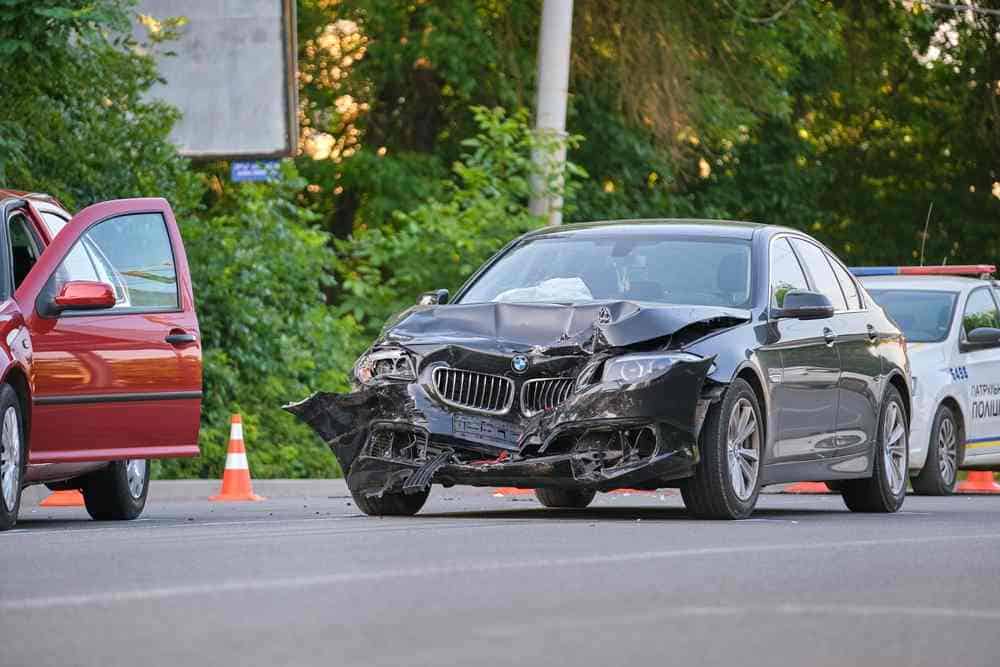
It helps to have a plan for what to do after a car crash, even if you think it will never happen to you. Getting into a car accident can be such an incredibly stressful experience, which can impact your ability to think clearly.
First, call 911 and report the accident. The shock may prevent you from fully comprehending what’s going on, and you might not even realize you have been injured. First responders to the scene will help manage the situation and get you appropriate medical attention as needed.
While you wait for first responders, take a moment to assess the crash by writing down or adding notes on your phone about what you remember and your immediate reactions. If you notice any pain or other physical symptoms, jot those down and let the first responders know when they arrive. You can also take this time to exchange information with the other driver if it is safe to do so.
For more information on what to do after a car accident, see our step-by-step guide
Seeking Immediate Medical Attention
After a car accident, even if you feel fine, it’s always best to err on the side of caution and get medical attention. Adrenaline can mask pain and other signs of an injury. This is why it’s critical to speak with a car accident doctor — they’ll know what signs and symptoms to look for and determine whether you have any injuries that need immediate treatment or might worsen in the future. If you’ve been in a car accident in Texas, visit a ProCare location near you for quality, comprehensive care. Our team of pain management doctors and car accident chiropractors treat a wide range of post-crash injuries and are here to help Texans like you recover safely and quickly from all types of car accidents. Schedule an appointment to get on the road to recovery today!
Frequently Asked Questions
What is the car accident rate in Texas?
Texas consistently records more than half a million reportable motor vehicle crashes each year. With over 600,000 crashes in 2025, the crash rate translates to roughly one crash every minute. When adjusted per 100 million vehicle miles traveled — a common safety benchmark — Texas remains close to the national average for crash rates but continues to see a higher-than-average number of traffic fatalities due to the sheer size of the state and the volume of roadway travel. Rapid population growth and heavy highway use contribute to sustained crash frequency across both urban and rural areas.
What is the #1 cause of motor vehicle crashes in Texas?
Speeding remains the leading contributing factor in Texas motor vehicle crashes. Tens of thousands of crashes each year are linked to driving at unsafe or illegal speeds. Higher speeds reduce reaction time and increase the force of impact, making severe injuries more likely. Distracted driving — including cellphone use — closely follows as another major cause. Together, speeding and driver inattention account for a significant percentage of crashes statewide. These risk factors are especially common among younger drivers and during high-traffic hours.
What are 90% of car accidents caused by?
The vast majority of car accidents are caused by human error. National traffic safety research estimates that more than 90% of crashes involve driver-related factors such as speeding, distracted driving, impairment, failure to yield, or poor decision-making. Mechanical failure and roadway defects account for a much smaller percentage of collisions. In Texas, common examples of driver error include texting while driving, driving under the influence, aggressive lane changes, and running red lights. Because most crashes are preventable, defensive driving habits and eliminating distractions remain critical steps in reducing crash risk.