
Back Pain Relief Near You in Texas
Back pain is one of the most common injuries after a car accident. You might feel fine at the scene, then wake up the next morning barely able to move. Or you might notice a dull ache that slowly worsens over days or weeks. Either way, car accident back pain is a signal that something was injured during impact, and it needs to be properly evaluated.
At ProCare Injury Specialists, we treat car accident back injuries and chronic pain conditions across Texas. Our multi-specialty team, including pain management physicians, orthopedic specialists, neurologists, and chiropractors, works together to diagnose, document, and treat your injury from the first visit through full recovery.
Types of Back Injuries We Treat After Car Accidents
At ProCare Injury Specialists, we treat several types of back pain issues, including but not limited to:
Herniated or Bulging Disc
Discs act as shock absorbers between the vertebrae of your spine. During a collision, the sudden force can cause a disc to bulge outward or rupture entirely. This often causes sharp, radiating pain down one leg (sciatica), weakness, or numbness.
ProCare’s orthopedic and neurology teams use imaging to confirm disc injuries and build a treatment plan, which may include pain management, chiropractic care, or specialist referral.
Muscle Strains and Soft Tissue Injuries
The most frequent car accident injuries involve the muscles and soft tissues. During a collision, the impact throws your body forward and snaps it back, forcing the spinal ligaments and muscles beyond their natural limits, which leads to stretching or tearing.
Because the full intensity of the pain often takes 24–72 hours to manifest, these injuries frequently go overlooked. This delay can cause them to develop into chronic issues, highlighting the importance of receiving a medical evaluation early on, even if your current symptoms seem minor.
Spinal Fractures
High-impact crashes can fracture one or more vertebrae, particularly in the lumbar and thoracic spine. Symptoms include sudden, severe localized pain, pain that worsens with standing or movement, and, in serious cases, neurological symptoms like numbness or loss of bladder control.
These injuries require immediate imaging and may need orthopedic or surgical intervention. If you suspect a spinal fracture, seek care the same day.
Lumbar Sprain and Facet Joint Injuries
The lower back is especially vulnerable in rear-end collisions, where the lumbar spine absorbs the brunt of the impact force. You may also develop facet joint injuries (damage to the small joints connecting the vertebrae), which cause localized lower back pain. This typically worsens when you twist, bend backward, or sit for extended periods.
These injuries don’t always show up on standard X-rays, which is why ProCare’s diagnostic approach includes clinical evaluation alongside imaging.
Sciatica
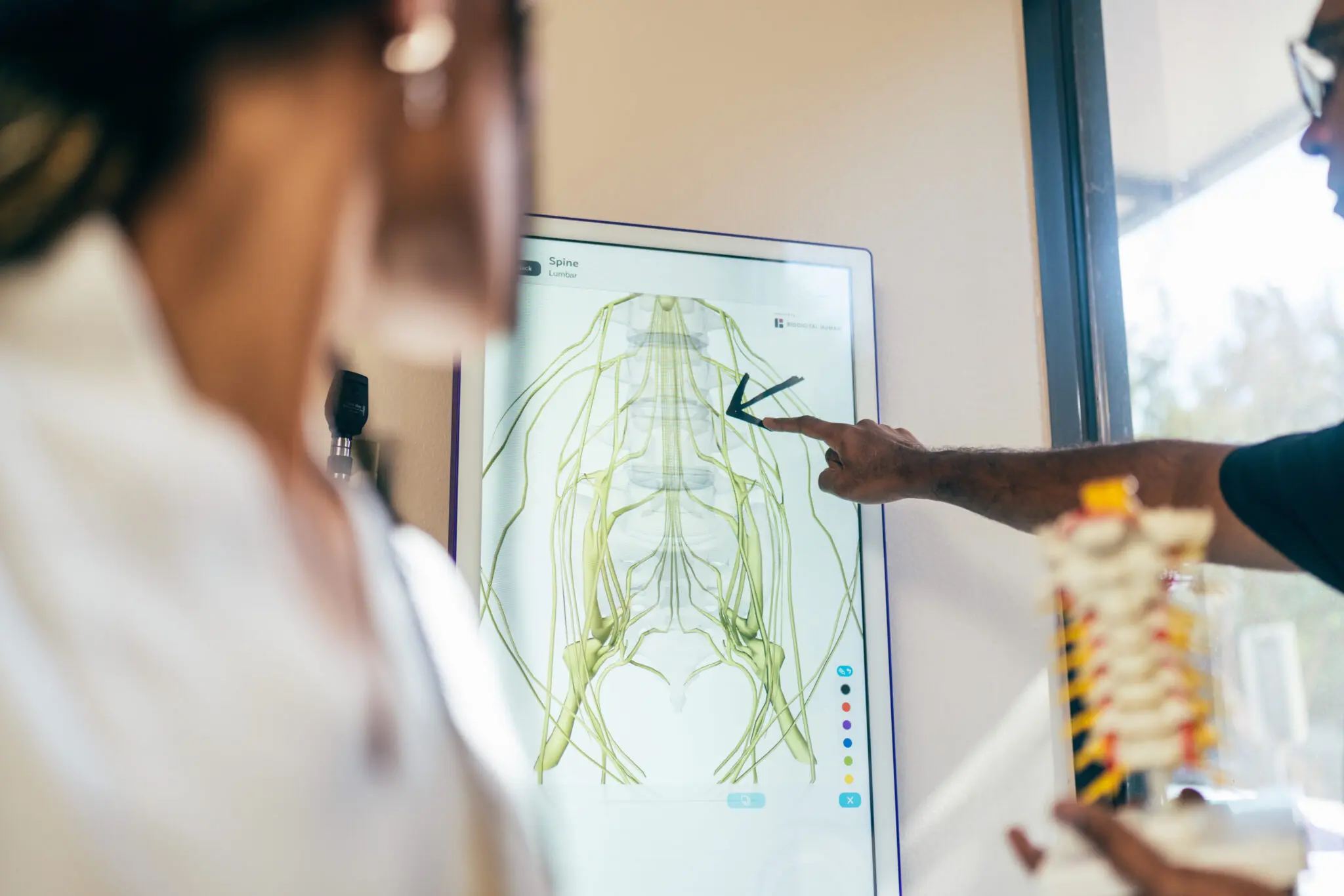
Sciatica isn’t an injury itself. It’s what happens when a nerve in your lower spine gets compressed, most often by a herniated disc caused by accident-related trauma. The result is a burning, shooting, or tingling sensation that runs from the lower back through the buttocks and down one leg, sometimes reaching the foot.
Because sciatica is a nerve symptom, effective treatment depends on identifying and addressing the underlying cause, not just managing the pain. ProCare can help you with both to ensure effective pain relief.
Pinched Nerve / Spinal Stenosis
In some cases, accident trauma can accelerate or trigger narrowing of the spinal canal, putting pressure on the spinal cord or nerve roots. This is a condition called spinal stenosis. Symptoms may include cramping, weakness, or numbness in the back, legs, or arms, and they can develop gradually weeks after the accident rather than all at once.
ProCare’s neurology team evaluates nerve-related symptoms and coordinates with orthopedic care when structural intervention is needed.